


Case Study Snapshot: What “Good” Can Look Like
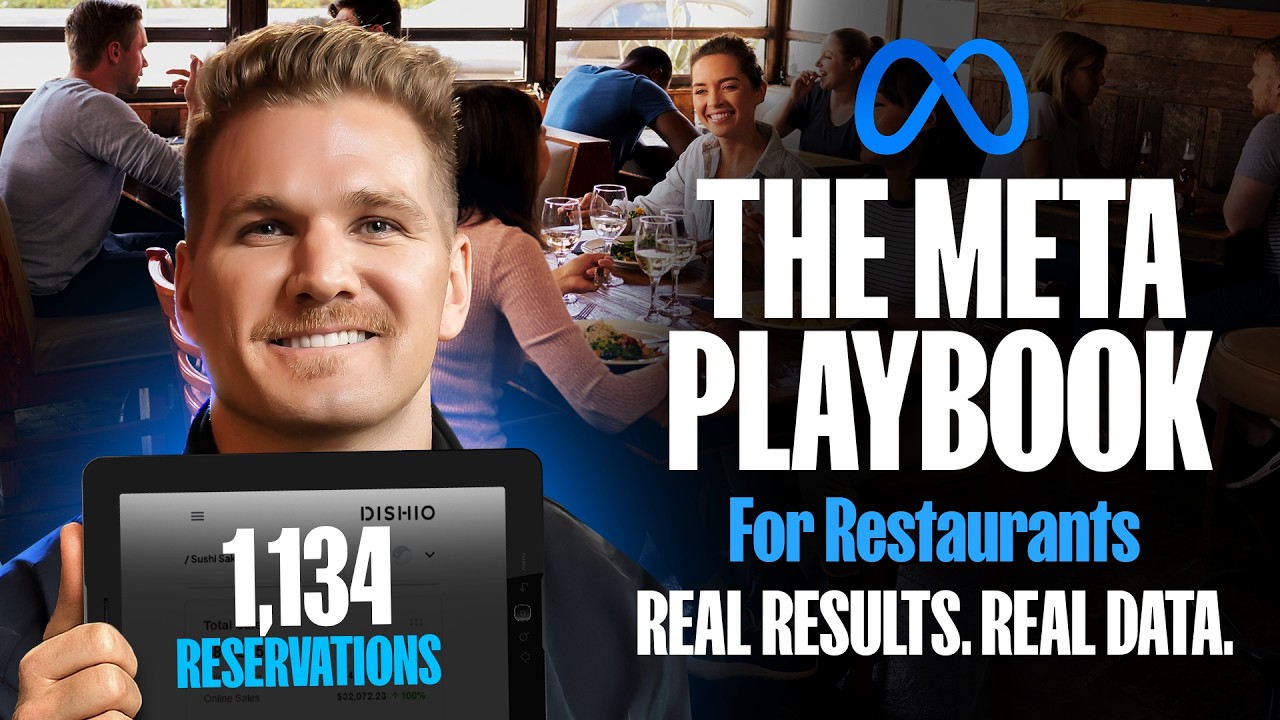
Here’s an example of what strong execution can produce (results vary by concept, market, offer, and operational readiness).
| Outcome | 1,134 reservations in ~30 days |
| Ad spend | $1,996 (about $2K) |
| Cost per reservation (range) | $0.80 to $13 |
| Cost per reservation (settled avg) | ~$1.76 |
| Claimed ROI example | Up to ~64x on ~$2K in spend (example shown in the video) |
Note: results vary by concept, market, and execution. The video emphasizes that marketing does not replace bad food or poor service—it amplifies restaurants that already deliver a strong guest experience.
What Changed: Meta’s “Andromeda” Update (In Plain English)
Meta’s “Andromeda” update reflects a broader trend: the platform is leaning harder into AI optimization.
Instead of forcing performance through narrow audience definitions, you:
- build multiple creative angles inside one campaign, and
- let Meta allocate budget toward what produces the best cost per reservation.
That’s why the best-performing meta ads for restaurants increasingly prioritize:
- Creative variety (multiple angles, not one message)
- Simple campaign structure (so AI can learn faster)
- Better signals (especially first-party guest data)
The New Rule: Creative Variation Is the Targeting
In today’s Meta environment, you don’t “target” your way to efficiency—you test your way to it.
A strong creative set should:
- communicate different reasons to visit,
- reflect different moments in the guest journey, and
- give Meta options so it can match message-to-person automatically.
This is the engine behind better results in facebook ads for restaurants and instagram ads for restaurants.
Five Creative Angles to Test in Facebook and Instagram Ads for Restaurants
Use distinct angles that map to different visit triggers.
| Creative type | What it highlighted |
| Brand overview Reel | Ambiance and overall vibe |
| Swipe carousel | Social hour offer/experience |
| Slideshow overview | A second “overview” angle in a different format |
| Lunch reservation ad | A clear lunch-driven reservation message |
| Experience carousel | More of the full restaurant experience |
The key point is not the exact formats—it’s the principle: each ad should highlight a different reason to visit, so the algorithm can match the right story to the right person.
The simplest campaign setup (the “playbook”)
Step 1 — Build 5–7 Creative Variations
Each creative should spotlight a different reason to visit. This is the core mechanic behind improved performance in meta ads for restaurants when AI is doing the matching.
Step 2 — Run One CBO Campaign
Create one campaign using Campaign Budget Optimization (CBO). Keep all creatives in the same campaign so Meta can allocate budget dynamically.
Step 3 — Let Meta Push Budget to Winners
As performance data accumulates, Meta will naturally shift spend toward ads generating the best cost per reservation—without constant manual tinkering.
Step 4 — Improve Meta AI Advertising With Better Signals (First-Party Data)
The fastest way to strengthen meta ai advertising is to give Meta better feedback.
If you can capture guest data, you can build stronger remarketing and optimization loops.
Dishio supports guest data for restaurants so Meta can learn from higher-intent guest signals—not just clicks.
Why First-Party Data Makes Meta Ads for Restaurants Stronger
First-party data helps you move beyond cold audiences and retarget real guests based on what they’ve done:
- visited
- ordered
- Reserved
- engaged
That is a key lever in any scalable restaurant marketing strategy.
Common Sources of First-Party Guest Signals
- QR code menus and in-store assets (turn physical visits into digital signals)
- POS data
- Online ordering data
- CRM data
- Website traffic and Instagram “link in bio” clicks
To make those signals usable, connect the tools you already run. Dishio offers restaurant integrations so guest data can flow into marketing activation instead of living in silos.
Before You Scale Spend: Make Sure the Foundation Is Strong
This playbook performs best when the restaurant has a strong baseline:
- solid reviews
- consistent food quality
- reliable service
- an experience people want to repeat
Ads are fuel on the fire—they amplify what’s already working.
For multi-unit operators, consistency is the unlock. Dishio enables marketing for chains to standardize guest capture and re-engagement across locations.
Putting It All Together: The Meta Ads Loop That Compounds
When restaurants combine:
- creative variation,
- a simplified CBO structure, and
- first-party guest signals,
performance tends to become more predictable. The platform learns faster, winners emerge faster, and budgets can scale with more control.
To see how this works end-to-end, explore the Dishio platform and how it supports measurable re-engagement beyond a single campaign.
Final Takeaway
If you’ve been running meta ads for restaurants the same way for years, the Andromeda shift is your wake-up call.
Build multiple creative angles, simplify campaign structure, let AI optimize delivery, and strengthen the feedback loop with first-party guest data.
Improve Your Meta Ads Performance With Dishio
Want to turn Meta campaigns into a repeatable growth channel?
Dishio helps restaurants capture guest signals and activate them—so your facebook ads for restaurants and instagram ads for restaurants can work harder with better data.