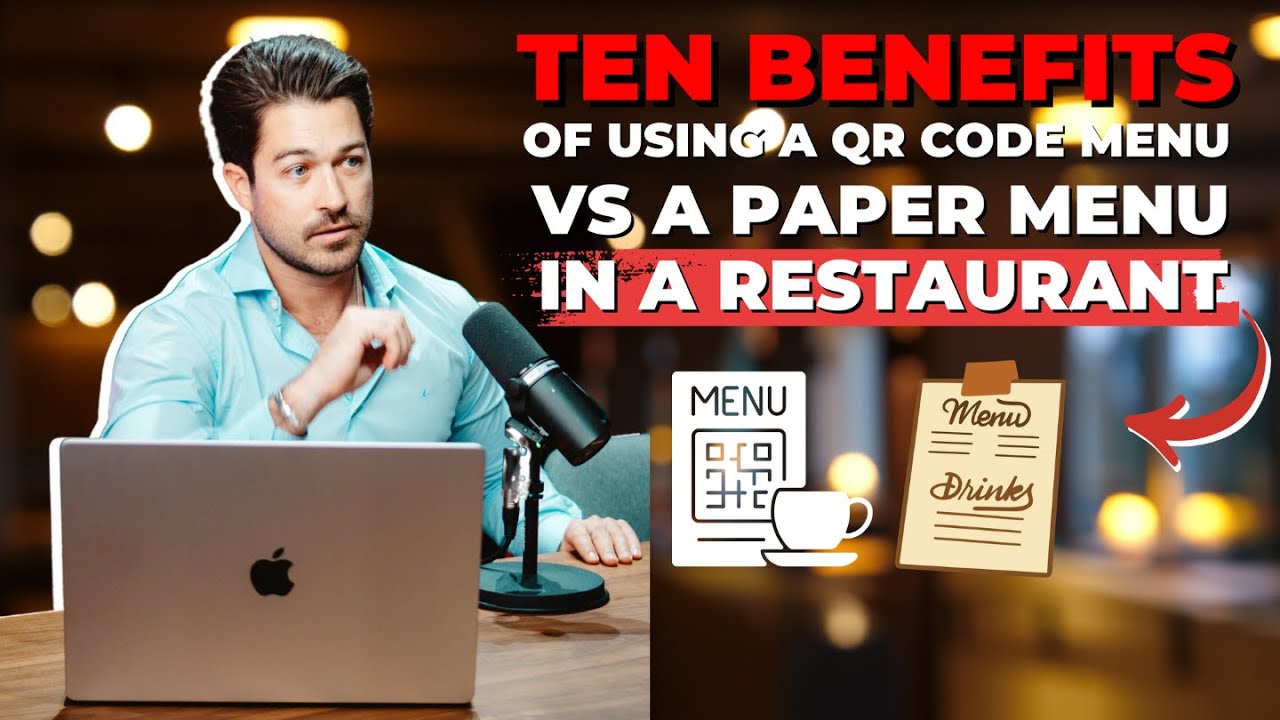
Below are ten advantages of QR code menus over paper menus. Every point is directly supported by the ideas shared in the video transcript, and you can also discover seamless integrations that enhance the entire digital menu experience.
| Benefit | Budget Summary |
| One Menu for All Locations | Update every location in seconds without printing cycles, keeping your menus aligned and costs controlled. |
| Built for Today’s Mobile-First Guests | A mobile-optimized layout delivers smooth browsing and faster decisions, matching how guests already use their phones. |
| Real-Time Updates Without Reprints | Make instant menu changes anytime—perfect for sold-out items, new dishes, or price adjustments. |
| Turn Menu Views Into Actionable Data | Gain insights on what guests view most so you can improve recipes, pricing, and promotions. |
| Smarter Marketing and Remarketing | Use viewing behavior to send personalized offers and reminders that bring guests back. |
| Dietary Badges That Build Trust | Give guests quick clarity on allergens and preferences so they feel safer and more confident ordering. |
| Item Details Like Origin or Alcohol Percentage | Add the deeper product details guests look for without crowding the menu layout. |
| Suggested Pairings That Increase Ticket Size | Show smart pairings that guide guests to a better experience and naturally lift average spending. |
| A Better Guest Experience That Improves Revenue | Reducing friction helps guests order more easily, boosting satisfaction and total revenue. |
| A Future-Proof Dining Experience | Stay adaptable as trends evolve with a flexible, fast-to-update digital system. |
1. One Menu for All Locations
For multi-location restaurants, paper menus require constant updates. When you change a price or update a dish, you must reprint menus and send them to each store. This creates printing costs, delays, and inconsistent menus.
A QR code menu lets you update your entire menu instantly in every location. There is no printing, no waiting, and no waste. This improves menu management and the entire guest journey—especially when you need a system that works location by location.
If you want a rollout path that fits smaller operators too, Dishio supports single locations with a modern menu setup designed for speed and consistency.
2. Built for Today’s Mobile-First Guest
Most guests already use their phones for everything. Traditional digital menus, especially PDFs, do not work well on mobile. Guests must pinch and zoom and struggle with formatting.
A digital menu built for mobile offers clear navigation, a clean layout, and an easy, interactive experience. It meets guests where they already are and delivers a modern dining experience—exactly what guests expect from qr codes for menus today.
3. Real-Time Updates Without Reprints
Paper menus freeze your menu in time. Once printed, you are stuck with that version.
Qr code menus allow instant updates with no reprints. Your menu can always reflect what is real in your kitchen. Updates become simple, fast, and stress free.
4. Turn Menu Views Into Actionable Data
A busy full-service restaurant in the United States can serve more than 10,000 guests per month. With paper menus, all of that guest behavior disappears. You cannot see preferences or trends.
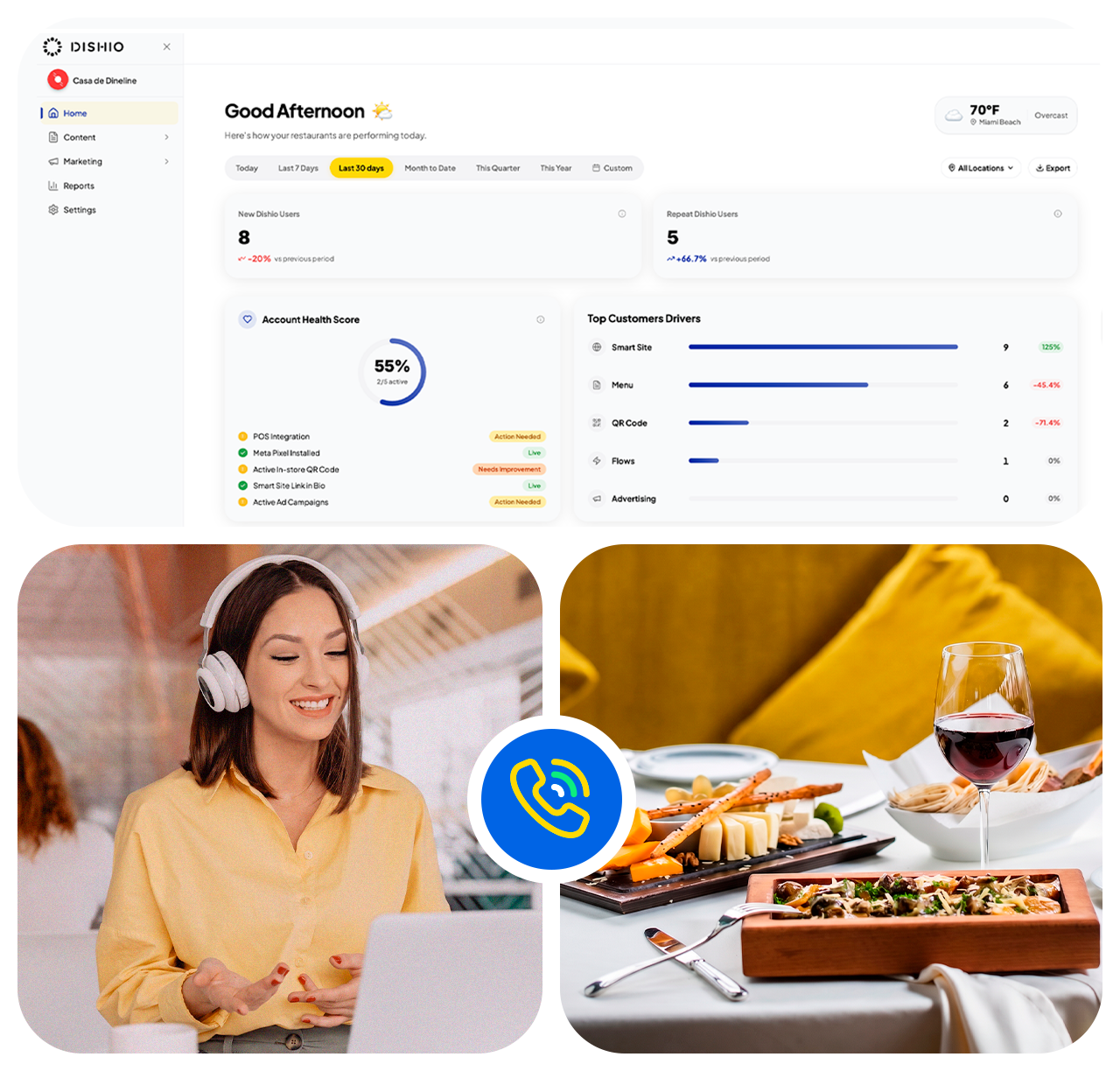
A digital menu changes that. With Dishio’s analytics, you can see popular items, guest patterns, peak times, and new versus returning guest behavior. This helps you make decisions based on real data instead of guessing.
To make this data usable across your stack, prioritize clean connections. Dishio offers integrations that help unify menu interactions with the rest of your restaurant systems.
5. Smarter Marketing and Remarketing
Once your menu is digital, every guest interaction becomes a future marketing opportunity.
You can:
- Reach guests about new menu items
- Promote events or launches
- Remarket to guests based on what they viewed
For example, if someone looked at a burger in the last week, you can send an offer to order that same burger online with a discount. This is simple, powerful, and underused by restaurants today.
When qr code menus for restaurants are connected to guest signals, they stop being “just menus” and start driving return visits.
6. Dietary Badges That Build Trus
Many guests care about dietary needs or restrictions. With paper menus, they must ask servers questions or guess what is safe.
Digital menus allow clear badges such as dairy free, gluten free, refined sugar free, and seed oil free. Guests can also filter the menu to hide items they want to avoid. Someone with celiac disease can remove all gluten items in seconds.
This creates a safer, easier, and more welcoming experience—one of the most practical advantages of qr codes for menus when you want guests to order confidently.
7. Item Details Like Origin or Alcohol Percentage
For items like wine or craft beer, guests often want details that paper menus do not have room for.
Digital menus allow you to show the item’s origin or its alcohol percentage. This creates clarity and helps guests make more confident decisions.
8. Suggested Pairings That Increase Ticket Size
Dishio includes a pairing feature that lets you recommend items directly on the menu.
For example, when a guest selects a steak, they can immediately see suggestions like a type of wine or sides such as mashed potatoes or asparagus. This helps guests choose a more complete meal and increases average ticket size.
This is one of the clearest ways a digital menu for restaurants can improve revenue without discounts.
9. A Better Guest Experience That Improves Revenue
When you improve the guest experience, you improve your profits. Digital menus reduce confusion, provide clarity, and make it easier for guests to explore your menu.
When guests feel supported and informed, they enjoy their visit more and order with more confidence.
10. A Future-Proof Dining Experience
Digital menus help restaurants respond to guest needs in real time and adjust quickly as the dining landscape continues to evolve. They give you control, flexibility, and insight that paper menus cannot offer.
Digital menus are not just the future. They are what is happening right now in modern restaurants—and qr code menus are the fastest adoption path for most teams.
If you want the full system behind the menu (data, automation, and activation), explore the Dishio platform.
Final Thoughts on QR Code Menus for Restaurants
A QR code digital menu is not simply a tech upgrade. It transforms your restaurant into a more dynamic, responsive, and customer-focused business. It gives you the ability to update instantly, learn from data, and connect with guests long after they leave.
Data does not talk. It screams. If you are not using it, you are leaving money on the table.
Now is the time to move beyond paper and treat your menu like the growth tool it truly is.
If you want help implementing qr code menus with the right setup and integrations, book a demo.