Quick Summary: Traditional vs Data-Driven Restaurant Marketing
| Then vs. Now | What changed |
| Traditional marketing | High cost, low feedback, and nearly impossible to track. Small businesses relied on word of mouth and luck. |
| Modern marketing | Trackable, automated, and scalable. You can see who visits, what they do, and how to bring them back. |
| Old model: rent attention | Pay platforms and hope. Once the guest leaves, you lose them. |
| New model: own relationships | Build a database and lifetime value through first-party data + follow-ups. |
Timeline: How Restaurant Marketing Changed (1960s → Today)
| Era | Primary channels | Reality for operators |
| 1960s–70s | TV, radio, magazines | Marketing was a “rich man’s game.” No real tracking; mostly creative + gut feel. |
| 70s–80s | Mass media, billboards | Still expensive and untrackable. “Spray and pray” marketing dominated. |
| 1990s | Direct mail, Yellow Pages | Some trackability via coupons/calls, but still clunky and costly. |
| Early 2000s | Websites + email | Websites became business cards; pop-ups were annoying; small businesses got a platform. |
| 2010s | Social + smartphones | Small brands could compete with small budgets; community and authenticity started winning. |
| Today | Data + automation | Precision marketing: track behavior, predict cravings, automate the journey, scale what works. |
1. The old game was rigged for small restaurants
In the 1960s and 70s, marketing was dominated by big budgets—especially painful for single-location restaurants. If you were a small business, you relied on word of mouth, luck, or hoping your sign got noticed.
The core limitation was simple: you couldn’t afford the big stages—and you couldn’t measure results in a scalable way.
2. Big budgets, no data (the Mad Men era)
TV, radio, and magazines dominated. Costs were huge and mostly limited to global brands.
Operators had almost no visibility into performance. You could look at sales and guess, but there was no real feedback loop.
3. Spray-and-pray marketing (70s–80s)
Mass media expanded: sponsorships, jingles, billboards everywhere. But for local businesses it stayed pricey and untrackable.
The play was: push a message, hope someone hears it, and cross your fingers they show up.
4. The first cracks: limited trackability (1990s)
Direct mail, Yellow Pages, and infomercials introduced the idea of measurable response.
If a coupon came back, that was the data. If a call came from an ad, that was your “ROI.” It wasn’t perfect, but it was progress.
5. Internet 1.0: a platform appears (early 2000s)
Websites became the new business cards and email started gaining ground.
Most websites were static and slow, and pop-ups were annoying—but it was still a major shift: small businesses finally had a real platform.
6. Social media levels the playing field (2010s)
Smartphones and platforms like Facebook, Instagram, YouTube, and Twitter changed everything.
For the first time, small brands could compete with small budgets. Community became valuable, content became king, and authenticity + speed + storytelling beat big budgets.
7. Today: Data-Driven Restaurant Marketing and Automation
Modern marketing is data-driven. You can see who visits your website, track who redeems offers, understand what time people eat, how often they return, and even predict what they might want next.
You can automate the customer journey and know exactly what’s working so you can scale it.
8. QR Code Menu Marketing + Retargeting (How It Works)
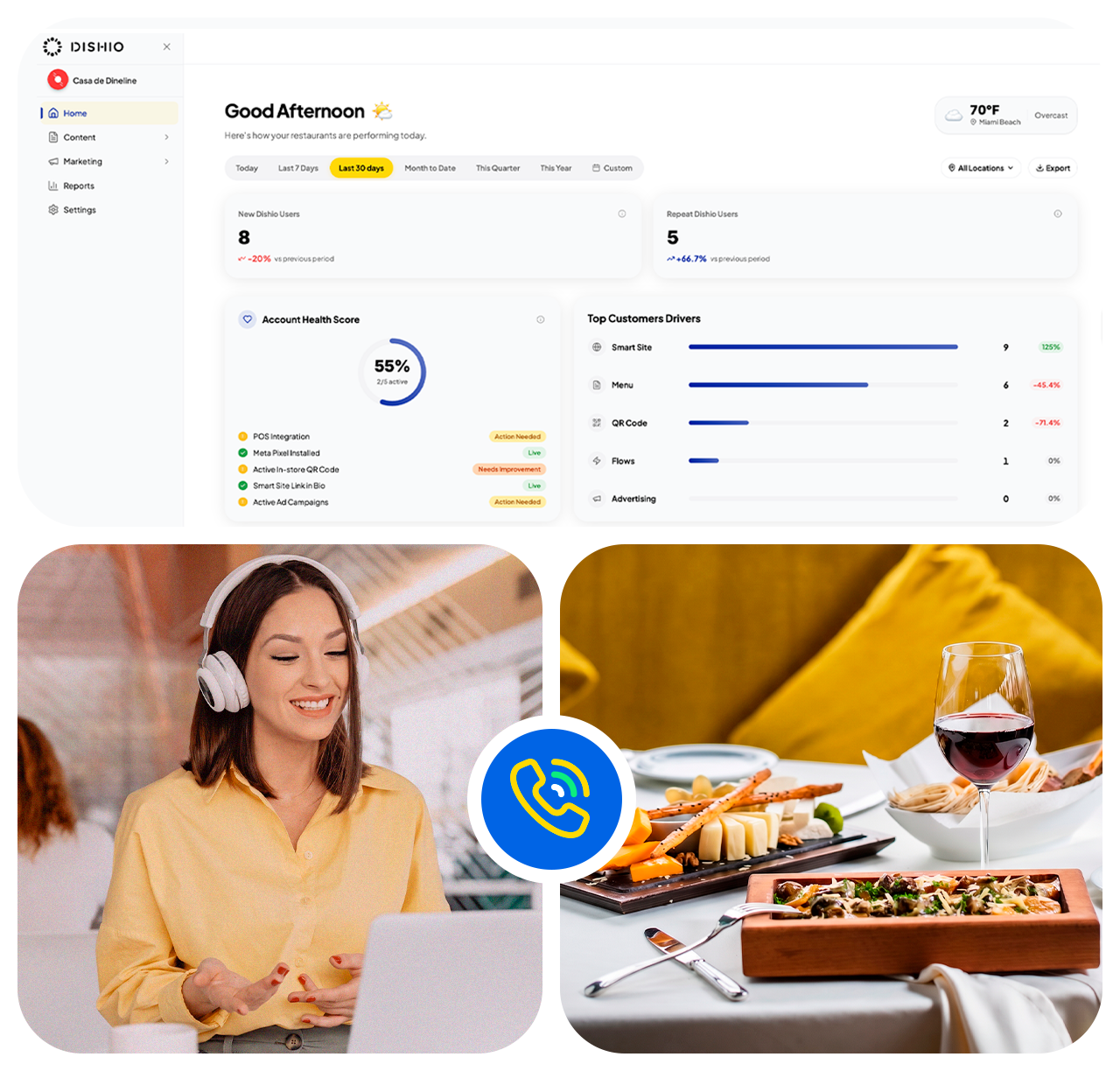
Smart marketing starts with a trackable trigger. When a guest scans a QR code menu, lands on a menu experience, or interacts with a digital touchpoint, you can capture first-party signals (contact info and behavior).
From there, you turn in-store behavior into an audience you can use for restaurant retargeting: track visits, offers used, and preferences—and trigger follow-ups automatically based on what guests actually do. That’s the core of trackable restaurant marketing: capture → automate → re-engage.
9. The Shift: Rent Attention → Own First-Party Data
The old way was renting attention on platforms (Google, Facebook, Yelp, Instagram).
The new way is owning the relationship: building a list, building a database, tracking instead of guessing, and optimizing for lifetime value—so growth becomes sustainable, predictable, and compounding with systems like Dishio.
10. What to Do Now: Build a Trackable Restaurant Marketing System
- Stop spending on untrackable tactics (flyers, random boosts) without measurement.
- Build a database using first-party data (QR, website, POS, ordering).
- Automate follow-ups (email/SMS) based on behavior, not guesswork.
- Use retargeting audiences to bring guests back cheaper than cold ads.
- Track guest lifetime value and optimize for repeat visits.
Final Thoughts: Track, Automate, and Grow Predictably
We’re living in one of the best eras in history for small business growth—because the tools are finally accessible.
The winning play is to stop guessing and start tracking: capture guest data, build a database, automate follow-ups across channels, and optimize for guest lifetime value.
That’s how restaurant marketing shifts from “loud and expensive” to “smart and compounding.”