The Hidden Problem: Most Restaurants Don’t Remarket
The majority of restaurants are not truly remarketing.
Remarketing is the process of re-engaging past customers using targeted efforts such as ads, email, or SMS.
In practice, most restaurants:
- Do not know who their customers are
- Do not capture enough data
- Cannot reach guests after they leave
Without this, there is no real way to bring customers back consistently.
Why Retention Beats Acquisition
Acquiring new customers is expensive.
In many cases, it can cost 5 to 10 times more to acquire a new customer than to retain an existing one.
Repeat customers also:
- Spend more over time
- Feel more comfortable with your brand
- Are more likely to return again
This makes retention one of the most profitable levers in restaurant marketing.
The Real Challenge: Staying Top of Mind
Even great restaurants are forgotten.
Customers are busy, and new restaurants are constantly opening.
If your restaurant is not actively reminding guests of their experience, you risk losing them to competitors.
Remarketing helps:
- Keep your brand top of mind
- Remind guests of past experiences
- Increase the likelihood of return visits
Why Most Restaurants Fail at Remarketing
The issue is not intention—it is infrastructure.
Every month, thousands of data points are lost because restaurants cannot identify who their guests are.
When someone visits:
- You may not know their name
- You may not have their contact information
- You cannot follow up
Even if some data is captured, it is usually incomplete.
This makes true remarketing impossible at scale.
The Opportunity: Turning Data Into Revenue
Instead of losing data, restaurants can create systems that:
- Capture guest information at every touchpoint
- Store and organize that data
- Use it to drive future visits
The difference is simple:
Lost data vs. captured data
One leads to missed opportunities. The other leads to growth.
The ACE Method: A Simple System for Growth
A structured approach to remarketing can be broken into three steps:
| 1. Activate | 2. Capture | 3. Engage |
| Set up systems both in-store and online that allow guests to engage with your brand. | Collect data from every interaction—whether through menus, links, or in-store touchpoints. | Use that data to reconnect with guests through ads, email, or SMS. |
This creates a continuous loop that drives repeat visits.
Activations: Turning Every Interaction Into an Opportunity
An activation is any touchpoint where a guest interacts with your brand.
Examples include:
- QR code menus
- Table tents
- Website visits
- Links in social profiles
These touchpoints allow restaurants to connect digital behavior with real-world visits.
Capturing Data at Scale
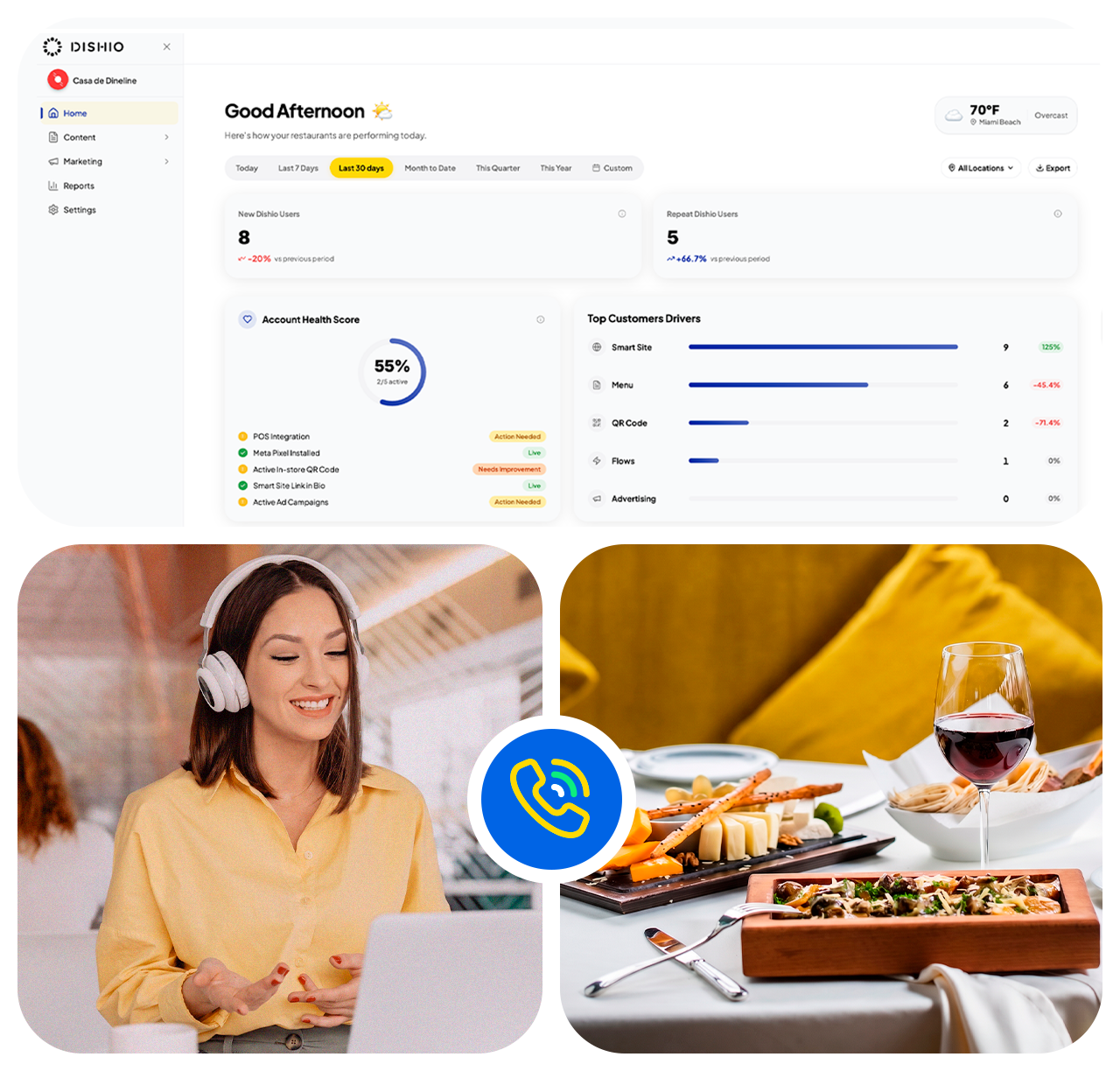
When guests interact with these touchpoints, data can be collected.
This includes:
- Who visited
- What they viewed
- How they engaged
Instead of losing this information, it becomes the foundation for future marketing.
Engaging Guests to Drive Repeat Visits
Once data is captured, it can be used to re-engage customers.
| This can be done through: | These efforts can: |
| Paid advertising | Promote events |
| Email campaigns | Drive reservations |
| SMS messaging | Increase online orders |
| Boost catering revenue |
The Compounding Effect of Remarketing
Remarketing becomes more powerful over time.
As more guests visit:
- More data is captured
- The audience grows
- Marketing becomes more effective
This creates a compounding effect where each month builds on the previous one.
Final Thoughts: From One Visit to Many
The goal is not just to get customers in the door once.
The goal is to bring them back again and again.
When restaurants move from:
- Guessing → to tracking
- One-time visits → to repeat customers
- Lost data → to owned audiences
They unlock a more predictable and scalable path to growth.
Remarketing is not just a tactic. It is a system that drives long-term revenue.