Case Study Snapshot: 64% Growth in One Season
| Metric | Result |
| Concept | Captain Jack’s on the Coast (3 locations, Southampton, New York) |
| Problem | Underperforming in June 2024 with little to no digital presence |
| Baseline revenue (monthly) | $88,000 |
| Improved revenue (monthly) | $144,000 |
| Peak-month result | 64% revenue growth by June 2025 vs. June 2024 |
| Search visibility | 10x+ more high-intent traffic from Feb → Jun (search store visits) |
Quick Summary: The 4-Step Fix for Restaurant Online Visibility
| Step | What changed |
| 1) Fix Google listings + SEO | Clean up listings, photos, Google Business Profile, and local SEO to rank for high-intent searches like “seafood near me.” |
| 2) Launch retargeting ads | Automatically retarget site visitors across Instagram, Facebook, Google based on behavior—making ads feel personalized. |
| 3) Add online reservations | Move from walk-in only to tap-to-book reservations to reduce walkaways and increase conversions and ticket size. |
| 4) Capture guest data automatically | Track reservations, QR scans, and website visits to build a list of names/emails/phones + behavior tags across every location. |
1) The Online Visibility Problem Most Groups Miss
Most restaurant groups have near-zero visibility where it matters most: the internet. When guests search “seafood near me” or look on Google Maps, many brands simply don’t show up.
Common symptoms are incomplete Google listings, no local ads, no guest data, no follow-up system, and no way to track who’s visiting—or how to bring them back.
2) What Being Invisible on Google and Maps Costs You
If guests can’t find your restaurants in the exact moment they’re deciding where to eat, they’ll go somewhere else. Competitors show up. Invisible locations bleed revenue daily.
The key insight is simple: you don’t just need better marketing—you need a system that shows up when and where intent is highest—for groups and single-location operators alike.
3) Case Study: Captain Jack’s (3 Locations, Southampton NY)
Captain Jack’s is a casual, family-friendly seafood concept with three locations. It should be packed from Memorial Day to Labor Day. But in June 2024, it was underperforming.
The core issue was not the food or the team—it was the lack of digital presence and infrastructure.
4) Root Cause: No Digital Infrastructure
They had three stores and no digital infrastructure to connect with guests: no Google visibility, no local targeting, no online booking, and no system to capture guest data.
They were essentially running blind—and didn’t have a clear path to fix it.
5) Step 1: Google Business Profile Optimization + Local SEO
The first move was cleaning up their online presence: listings, photos, Google Business Profile, and SEO.
The goal was high-intent visibility in Google Maps ranking for restaurants and “near me” searches. After cleanup, they ranked for searches like:
• “seafood near me”
• “best dinner in Southampton”
• “oceanfront restaurants”
When tourists searched, they showed up—and showed up first.
6) Step 2: Restaurant Retargeting Ads (Behavior-Driven)
Next, retargeting ads were launched. If someone visited the site but didn’t book, they started seeing ads across Instagram, Facebook, and Google.
The key detail: the ads were automated and driven by customer behavior, so they felt personalized.
7) Step 3: Add an Online Reservation System
They were walk-in only, which was a major miss. A booking system was added so guests could tap to reserve.
The immediate impact described: more conversions, higher tickets, and fewer walkaways.
8) Step 4: Restaurant Guest Data Capture Across Locations
Guest data capture was enabled across reservations, QR scans, and website visits—so everything is tracked.
This builds a list automatically: names, emails, phone numbers, and behavior tags across every location.
9) One System for Multi-Location Restaurant Marketing
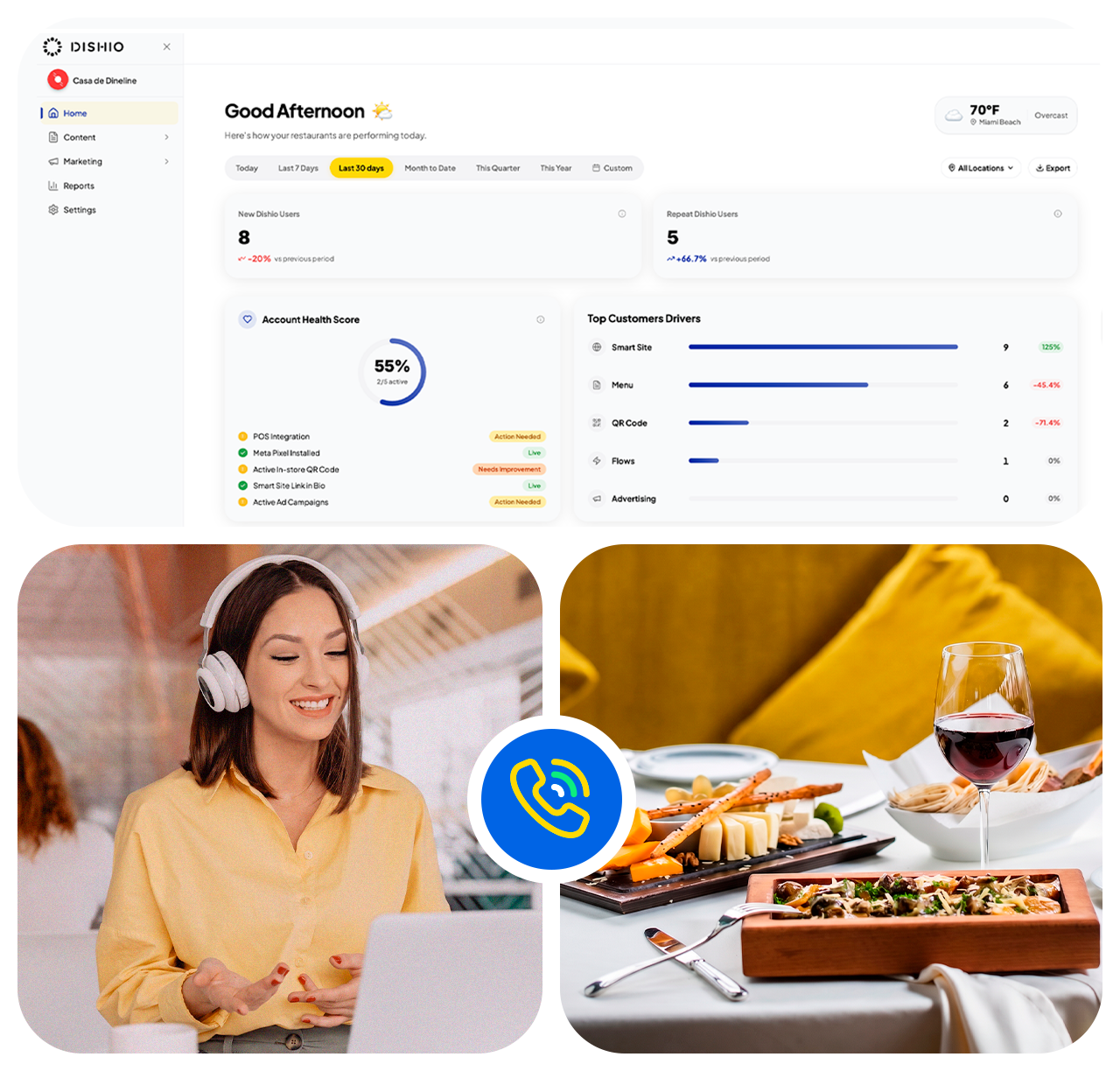
The entire system ran through Dishio. The promise is one platform and one strategy that gives the operator full visibility across every store.
Instead of disconnected tools and guesswork, the group gets trackable results and a repeatable machine.
10) Results: 64% Revenue Growth + 10x Search Visibility
By June 2025, Captain Jack’s saw a 64% revenue increase compared to the same month the year before.
Search visibility also exploded—from “crickets” in February to over 10x more high-intent traffic by June, supported by integrations that connect visibility to measurable outcomes.
Same locations. Same team. Same food. The difference was a real system behind the scenes—driving more reservations, higher average checks, more repeat visits, and a growing guest list that fuels smarter marketing every week.
Final Thoughts: A Repeatable Visibility System
If your restaurants aren’t showing up online, you’re bleeding revenue across every store.
The fix isn’t a one-off tactic. It’s a system:
1) Own your Google presence and local SEO.
2) Retarget behavior so you stay top-of-mind.
3) Make booking frictionless with online reservations.
4) Capture guest data automatically so growth compounds.
Once that’s turned on across your group, results can compound fast—because you’re finally showing up when and where intent is highest.