Case Snapshot: $100K/Month Spend + 1.75 Repeat Rate
| Metric | Detail |
| Brand size | 47 locations |
| Ad spend | $100,000+ per month across Facebook, Instagram, and Google |
| Repeat customer rate | 1.75 average visits per guest (tracking not fully confident) |
| Core issue | Most spend drives one-time guests (acquisition-only growth) |
Quick Summary: What Changes the Outcome
| Shift | What it unlocks |
| Stop relying on acquisition as the only lever | Protect margins when CPC rises and competition spikes. |
| Build a retention system | Turn first-time guests into 2nd, 3rd, and 4th visits. |
| Centralize guest data | Understand who visits, what they order, and how often they return. |
| Use automated flows | Trigger behavior-based follow-ups (bouncebacks, segmented offers, catering pushes). |
1. The Hidden Problem With Big Ad Budgets
The issue isn’t always the acquisition system. In this case, the group’s ads were working at scale—but the repeat rate revealed the real problem.
When repeat rate is low, almost every ad dollar is buying a first-time visit. That can grow top-line, but it can also shrink margins and become unsustainable over time.
This is why restaurant retention marketing matters as much as acquisition: without it, every month starts at zero again.
2. Why Acquisition-Only Growth Fails (Especially Long Term)
When growth depends almost entirely on new customer acquisition, profitability becomes dependent on Google and Meta pricing.
If cost per click increases or competition spikes, profitability can disappear quickly because you’re bidding to serve ads.
A stronger model is to make your paid traffic compound—so every new guest has a system that pushes them toward a second and third visit.
3. Retention vs. Acquisition: The Missing System
The key gap is a retention system: capturing guests who already walk through the doors and turning visits into second, third, and fourth visits.
Many groups already have large lists—emails and contacts sitting in their POS and other programs—but without a structured way to activate that data, it stays dormant.
A usable restaurant retention strategy converts scattered contacts into a repeatable engine.
4. The Goal: Maximize Revenue Per Guest Over the Full Lifecycle
Instead of optimizing only for first-time visits, the focus shifts to maximizing revenue per guest across the entire lifecycle.
That includes repeat visits and higher-value outcomes like catering and private events—offers existing guests are more likely to buy than brand-new guests.
If you want help building the full lifecycle approach, start with restaurant marketing services.
5. The Power of Small Lifts in Repeat Rate
A move from 1.75 repeat visits to 2.5 may not sound huge in isolation. But across 47 locations, that shift represents a meaningful lift in lifetime value and revenue—without spending an extra dollar on acquisition.
So the real question becomes: how do you make that lift happen systematically?
6. Why Most Restaurant Systems Break (and Where Revenue Leaks)
Large brands often have teams dedicated to understanding customers: who visits, what they order, how often they return, and how to bring them back.
But many groups with 10, 20, or 50 stores don’t have a unified system to connect the dots. Guests walk in, eat, and leave—with no data trail and no follow-up.
That’s revenue leaking out the back door every day.
7. Step 1: Capture Guest Data Across Every Touchpoint
The approach starts by casting a wide net across guest touchpoints:
- QR code menus at the host stand, bar, and table
- Pixel tracking on the website
- Smart promos and digital menus guests actually engage with
Every scan and every click becomes a connection point between the guest’s phone and the brand.
For a location-by-location rollout (without adding labor), start with guest data capture.
8. Step 2: Centralize and Clean Data Into One Dashboard
Capturing data is one thing—using it is another. Many restaurants have data inside the POS but don’t leverage it.
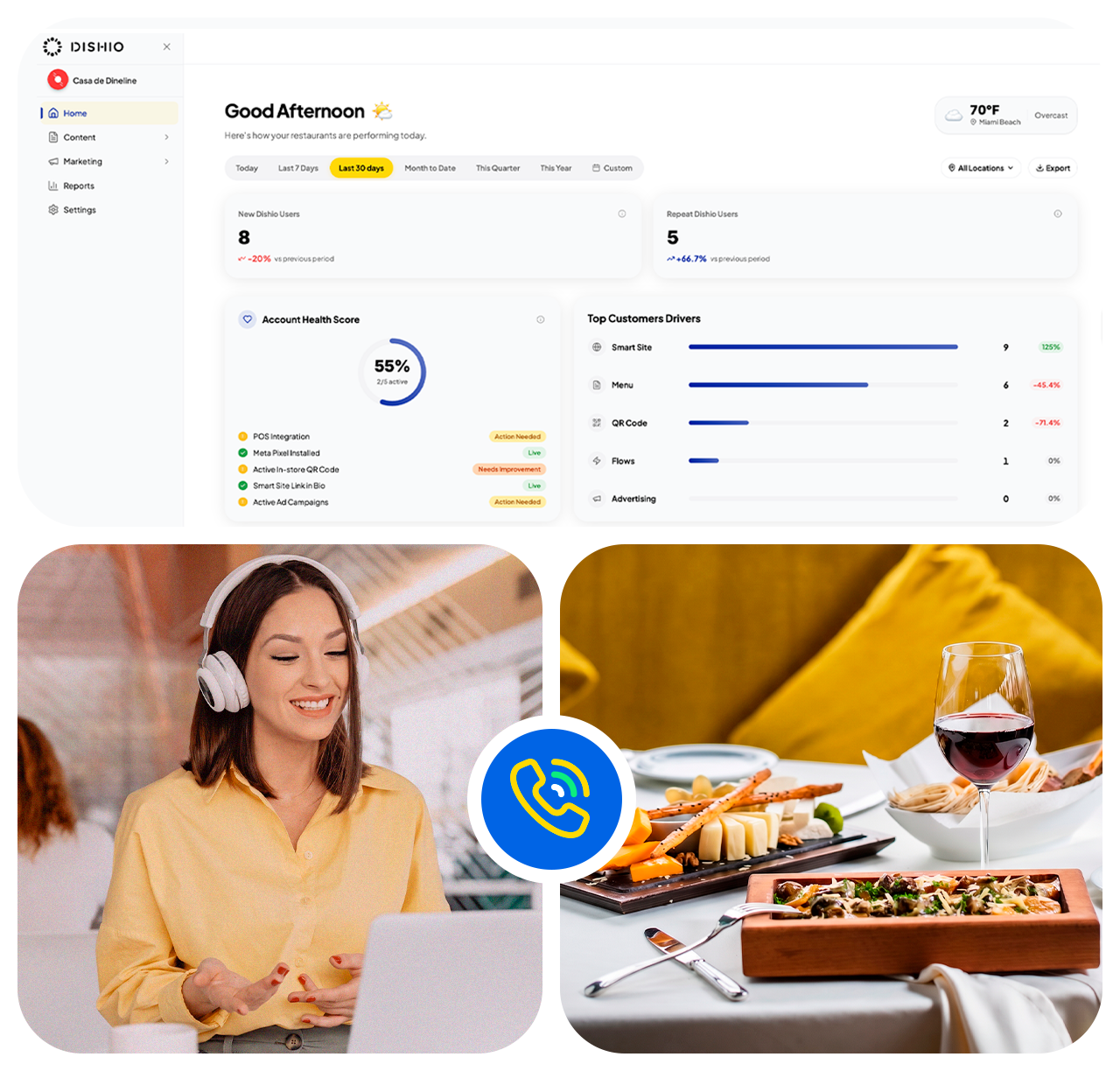
The system described centralizes data into one dashboard so operators can see who visited, what they ordered, how often they return, and what they engaged with—so marketing becomes precision instead of guessing.
To reduce fragmentation across tools, prioritize restaurant integrations so guest signals can actually power your campaigns.
9. Step 3: Turn Data Into Revenue With Automated “Flows”
Flows are automated systems that turn guest behavior into revenue. This is where restaurant retention marketing becomes operational.
Examples mentioned:
- First-time guest scans a digital menu → follow-up or bounceback offer sent ~2 weeks later to drive the 2nd visit
- Guests who consistently order vegetarian dishes → grouped and sent promos for new vegetarian items
- Guests with 1–2 visits → begin seeing catering emails/ads to drive higher-value orders
The point: behavior triggers follow-up automatically, building lifetime value without just throwing more money at ads.
If you want this running end-to-end, explore the guest data platform.
10. Proof Points: Real-World Examples (Kiki on the River + Habibi)
A real-world example is shared using a guest capture system across Kiki on the River: QR codes for bottle service, interactive dining room menus, a scan-to-order bar flow, and an additional giveaway exchange to capture more emails and phone numbers.
Within 90 days, they captured almost 10,000 guest profiles. With that audience, they retargeted on Facebook and Instagram and reported a 324x return on ad spend (calculated using reservation value vs. ad spend for high-ticket bottle-service reservations).
A sister concept, Habibi, was also mentioned: reservations were booked during slow season for under $7 each.
The takeaway: these are single-location examples, but the same retention system is positioned to work at scale for multi-location brands.
Final Thoughts on Restaurant Retention Strategy
If you’re spending heavily on Meta and Google, the fastest path to stronger margins may not be spending more—it may be making more per guest.
The framework outlined here is straightforward:
- Capture guest data across touchpoints.
- Centralize it into a single view across locations.
- Use automated flows to drive repeat visits and higher-value purchases.
That’s how a group can convert traffic they already paid for into predictable revenue over and over again.