

Quick Summary: The Core Thesis
| Idea | What it means for operators |
| AI is the next big boom | Operators who ignore it risk falling behind—similar to those who ignored the internet or social media shifts. |
| AI needs data to work | POS + bookings + ordering + in-store behavior are the fuel for AI-driven marketing and decisions. |
| QR menu scans can unlock first-party data | Every scan becomes a chance to capture guest data (name, email, phone) and behavior signals. |
| Data → personalized retargeting | Use captured signals to run personalized campaigns on Meta/Google to bring guests back automatically. |
| Same system can support any objective | Reservations, online ordering, catering, and even boosting underperforming locations can be targeted based on real guest data. |
1. AI is a permanent shift (and the pattern repeats)
The argument is that history repeats itself: businesses that ignored the internet shift and later ignored social media often fell behind. AI is framed as the next major shift, and operators who don’t respect it risk getting lost again.
2. The most common question: “How can I use AI in my restaurant?”
The key answer given is simple: AI becomes valuable when it comes with data. Without data, AI can’t do the “great, incredible things” people expect.
3. Your POS is already a data engine
If you’re not living in the stone age, you have a point-of-sale system. That system contains information like buying habits and behaviors, online orders, potentially in-store guest patterns, repeat traffic, and more.
4. You’re collecting even more data than you realize
If you use booking systems (like OpenTable or Resy) or other online ordering platforms, you’re capturing additional data sources. The point is that operators often have more data than they think—they just aren’t using it strategically.
5. The “data gold mine” opportunity (and why Instagram posting isn’t enough)
The transcript emphasizes that simply posting on Instagram daily isn’t a strategy to reach ambitious revenue targets per location. The call is to use data + AI rather than relying on short-lived social reach.
6. A data source many operators overlook: in-store QR menu scans
Every time a guest walks into a restaurant, there’s an opportunity for them to scan a digital QR code menu at the table. That scan can be used to capture first-party data like first name, last name, email, phone number, and more.
7. What behavior you can analyze from a digital menu experience
The transcript describes analyzing behaviors such as how long guests spent on the menu, which items they looked at, how long they viewed specific items, and whether the items they viewed are the ones they ended up ordering.
8. Guest experience features that also generate better data
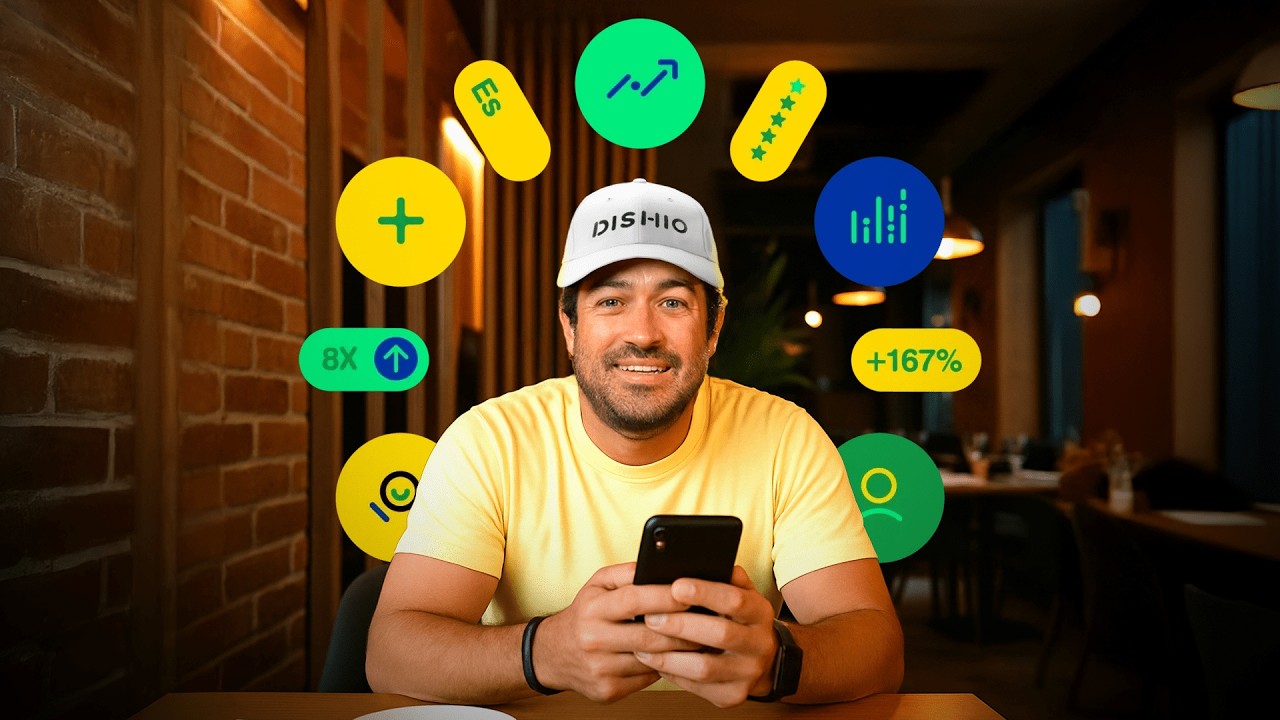
The menu experience is described with features like translation into four languages (English, Spanish, Portuguese, French), menu filters by dietary restrictions (including gluten-free and dairy-free), and a search function.
The logic is: better guest experience leads to more engagement, which produces richer data.
9. Turning data into personalized retargeting on Meta and Google
Once data is captured, it can be connected to platforms like Meta or Google to run retargeted, personalized campaigns.
An example is given: if guests looked at a fried chicken sandwich, you can build a retargeting campaign for people who viewed that item and show them that same item again, including a direct ordering message and a time-limited offer (e.g., free delivery for direct orders).
10. Why this scales across objectives and locations
The system is positioned as flexible: if the goal is more reservations, run campaigns that push bookings through OpenTable or other platforms. If the goal is catering, push catering. If you’re launching new locations—or one location is underperforming—the data can be leveraged to support those units.
The closing message is that the opportunity starts with capturing guest data in-store and using AI to drive personalized campaigns via ads and emails to bring guests back.
Final Thoughts
The bottom line in this guide is simple: AI without data is just hype.
If you’re already collecting data through your POS, reservations, online ordering, and QR scans, you’re sitting on a gold mine. Capturing it, analyzing it, and using it to run personalized retargeting can bring guests back on automation—and that’s positioned as one of the biggest opportunities seen in the last decade.
If you want to explore how this system works end-to-end—capture → analyze → AI → retarget—Dishio is positioned as an all-in-one platform to support it.